
Numbers to replace names on RCMP badges
New name-tag policy intended as a defence against doxxing

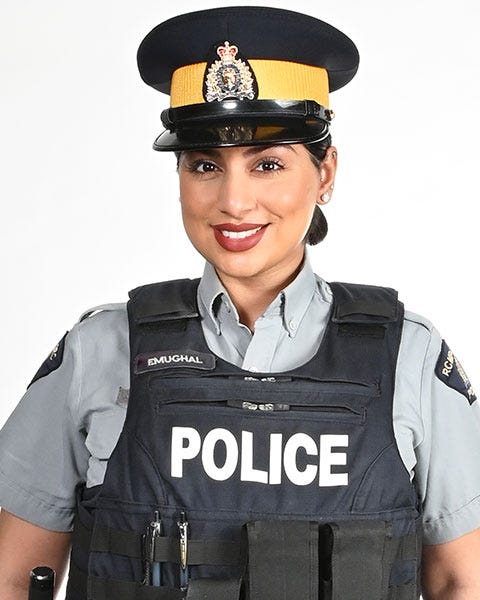
The name tags that RCMP officers are required to wear for identification no longer have to display their actual names, a move intended to protect them from digital bad actors.
In a significant amendment to the Mounties’ Uniform Dress Manual, regular members now can choose to display only their regimental numbers rather than their names.
The policy revision came into effect on March 30, designed as a safety measure to prevent officers from becoming public targets, especially through doxxing by malicious persons who expose private information such as home addresses.
“The change responds to increasing member safety concerns, including doxxing, online harassment, and off duty targeting,” says a briefing note to Public Safety Minister Gary Anandasangaree.
A copy of the April 27, 2026, note, signed by RCMP Commissioner Mike Duheme, was obtained under the Access to Information Act. The redacted document can be downloaded here:

So-called numeric name tags had previously been banned outright in the RCMP except for duties related to the policing of protests, and then only with approval from senior officers. Name tags are worn on the upper right side of the RCMP uniform, typically above the shirt pocket.
Identification tags bearing officers’ names have also been standard in many Canadian police forces as a measure of accountability, so that citizens can identify officers involved in policing interactions.
But last year, the Calgary Police Service launched a pilot program that removed officers’ last names from uniforms and replaced them with badge numbers, which must always be visible. Calgary officers could share their names voluntarily with citizens only if they felt safe in doing so. Doxxing was cited as a potential threat.
The new RCMP policy requires either the name or the regimental number, at the officer’s discretion. Some units, such as the Yukon RCMP, have already rolled out the new protocol.
Some RCMP members have reported receiving death threats, including against their families, after their names and cellphone numbers were leaked on social media, especially during the 2022 convoy protests at border points and in Ottawa.
There have also been instances of municipal police officers pulling off their identification badges during certain policing operations. In 2021, there were allegations that officers with the Halifax Regional Police tasked with clearing a homeless encampment had removed their name tags. And in 2010, Toronto’s then-police chief Bill Blair said 90 officers faced disciplinary actions for removing name tags during the G20 summit protests.
The briefing note says the new RCMP name-tag policy will not affect accountability. “Members will continue to be required to wear a visible, unique identifier when interacting with the public; public complaint and oversight processes remain unchanged.”
But the document also acknowledges the new policy may reduce trust. “There is a risk that some stakeholder may perceive numeric identifiers as reducing transparency and therefore there are potential impacts on community and Indigenous relations, particularly in small communities,” Duheme told Anandasangaree.
This makes a lot of sense. And for members of the public,it is a lot easier to remember a short number than a name, which can be difficult to spell. And of course there's the safety aspect. Good idea.